
Why Families Are Selecting Senior Residences With Artificial Grass
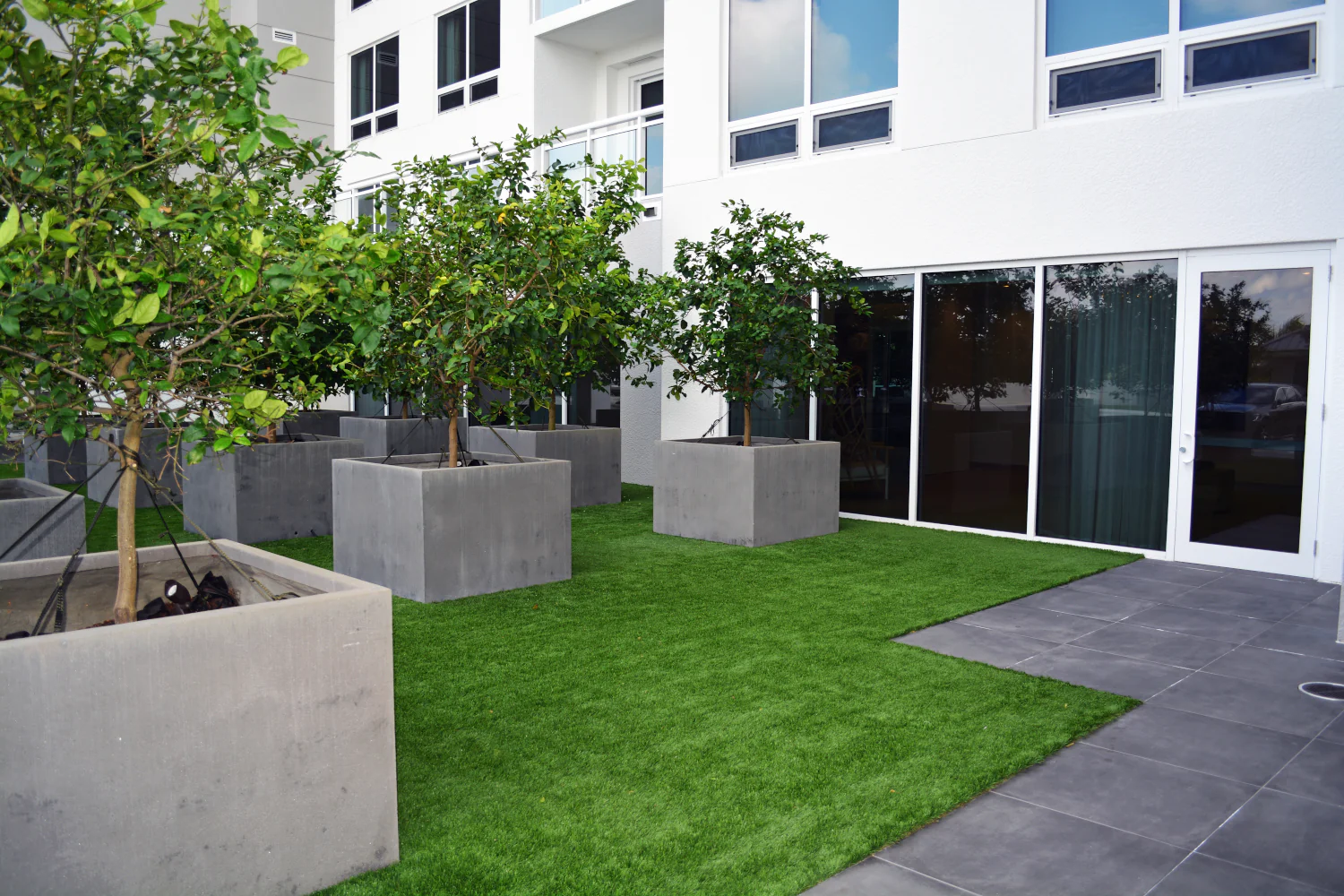
You're walking through a senior living community for a parent, and you step outside to look at the courtyard. The grass is worn in one corner, muddy near the sprinkler heads, and a maintenance crew is out there with a mower, right in the middle of the afternoon when residents typically sit outside.
You notice. Families always do.
More senior living communities are exchanging that scene for artificial grass, and the reasons extend well beyond curb appeal.
THE FALL RISK NOBODY DISCUSSES ENOUGH
Natural grass creates hazards that aren't always visible until someone gets hurt. Sprinklers create wet, slick patches. Foot traffic wears bald spots into the lawn, and those spots turn into dips and divots. Introduce a little rain, and a courtyard that looked fine yesterday becomes a fall in the making today.
For residents who use walkers or canes, that unevenness is a serious problem, not a minor inconvenience.
Synthetic turf installation solves this at the surface level. A properly installed lawn turf grass system sits on a compacted, even base, so there's no mud, no soft spots, and no surprise dip lurking under the blades. The footing remains predictable every day, in every season, no exceptions.
LOWER COSTS, FEWER HEADACHES FOR THE PROPERTY
Water bills accumulate fast on a property with acres of grass to irrigate. So does the work: mowing, edging, reseeding, fertilizing, and replacing dead patches after a harsh summer.
Artificial turf removes most of that out. No watering schedule, no mowing crew disturbing quiet hours, no seasonal reseeding budget. For a facility director working with a tight operating budget, that's money that can go toward staffing, programming, or upgrades residents actually notice.
And the lawn retains its shape and color without any of that upkeep, which is something natural grass can deliver, even with a full-time crew on it.
YARD SPACE RESIDENTS CAN GENUINELY USE
A backyard space that's too muddy to traverse after rain or too patchy to sit on isn't serving its purpose. Artificial grass remains usable and green throughout every season — no dead spots in winter, no dry, brown stretches after a heat wave.
That matters more than it sounds. Time spent outdoors is linked to residents' mood, sleep, and overall well-being. A lawn that's consistently ready for a walk, a family visit, or an afternoon in a chair outside gets used far more than one that's only presentable for just a few weeks a year.
BUILT FOR WALKING PATHS AND COURTYARD SEATING
The top setups integrate artificial turf with the paths and seating areas residents rely on most. Turf bands along a walking loop give a soft, forgiving edge beside a paved path. A courtyard seating area surrounded by artificial grass, instead of dirt or gravel, looks polished and inviting instead of like an afterthought.
It's a minor design choice that changes how a space is used every single day.
WHAT THIS MEANS IF YOU'RE EVALUATING COMMUNITIES
If you're evaluating senior living communities for yourself or an aging parent, take a walk outside before committing to anything. Inspect the grass. Is it spotty? Muddy? Was someone cutting the grass during visiting hours? Small details like these tell you a lot about how a property is maintained overall.
A community that's invested in a real synthetic turf installation for its outdoor spaces is usually a community that's paying attention to the details that matter for day-to-day comfort and safety.
Wondering what artificial grass could look like on a property you're evaluating, or one you manage? Southwest Greens collaborates with communities across the country to create outdoor spaces residents get to enjoy year-round. Contact Southwest Greens or call us at (877) 260-7888 to walk through options.