
What to Review Before You Spec a Dog Park Surface
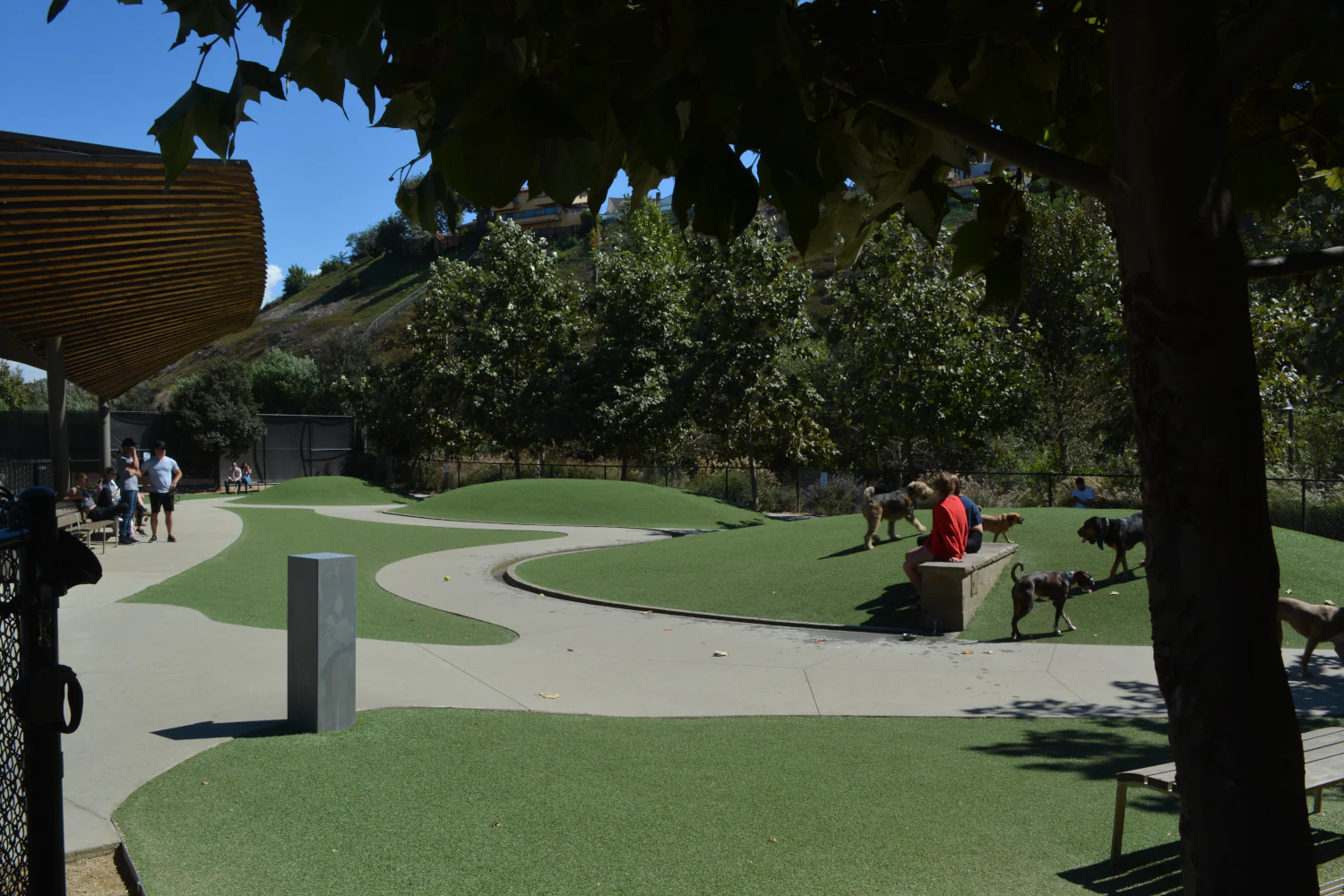
Dog parks are featured on almost every amenity list now. HOAs add them, apartment developers market them, and city parks departments receive nonstop requests for them. But once the plan gets approved, someone has to confront the more difficult question: what actually goes on the ground?
Four options often make the shortlist: gravel, mulch, natural grass, and artificial turf for dogs. Each one carries a different math problem attached. Here's how they stack up.
Gravel: Affordable to Install, Costly to Keep Clean
Gravel costs less upfront than almost anything else on this list. But dogs dig in it, kick it beyond the edges, and track it everywhere. Waste cleanup is tougher too. Solid matter disappears in the rock, and the surface traps urine odor with no way to flush it out. Add in the labor cost of raking, replenishing, and hosing it down, and gravel's early savings shrink fast.
Mulch: Soft on Paws, Tough on Maintenance Budgets
Mulch drains reasonably well, but it breaks down. Natural mulch needs replacing every year or two, and it's a magnet for bacteria and mold once it's soaked and matted down by paw traffic. Certain municipalities have removed mulch from dog parks entirely because of sanitation complaints.
Natural Grass: Looks Good for Only About a Month
Live grass is the default many boards begin with, since it resembles a standard park. The problem shows up fast: heavy dog traffic kills grass in patches, especially near gates and water stations where dogs gather. Mud after storms, dust throughout the dry season, and a sprinkler system that needs to run nonstop to keep the lawn alive. Live grass in a dog park is a maintenance job, not a one-time installation.
Artificial Turf: Greater Install Cost, Reduced Cost of Ownership
Artificial grass for dogs costs more to install than any of the above. That's the honest number. But the upkeep math flips fast. A professionally installed synthetic surface doesn't require mowing, reseeding, or watering. It stands up to heavy paw traffic without thinning out in patches. And with the correct backing and infill, it drains urine straight through instead of trapping odor at the surface.
Over a three-to-five-year span, artificial grass installation often comes out cheaper than a natural lawn once labor and replacement costs are included.
What Makes Turf Succeed for a Dog Park (and What Doesn't)
Look around, and you'll see plenty of fake grass for dogs on the market, but not every product performs in a public dog park environment. A few things separate a surface engineered for this job from one that won't last within a year:
- Engineered drainage backing. Select a high-flow backing designed for pet use, not a conventional turf backing with holes punched in it. This is how stops odor from developing.
- Infill. Ammonia-absorbing, antimicrobial infill is more important here than in nearly any other turf application. Miss this, and you're managing a smell problem within months. Our K9 Sand is engineered specifically for pet parks.
- Fiber type. Commercial-grade, UV-stable polyethylene stands up under ongoing paw traffic without matting down. Pile height. Lower piles, in the 1.25 to 1.5 inch range, clean easier and hold up better than the taller piles used for residential lawns.
- Warranty conditions. Confirm that the warranty includes commercial or high-traffic use, not just backyard installs.
The True Question for Your Spec
Cheapest to install and the cheapest to service are rarely the same product. Mulch and gravel appear more attractive on the front-end budget line. Natural grass sounds better on paper until the first summer. Pet turf has a higher up-front cost and a lower cost over time, with fewer maintenance calls, less staff labor, and no seasonal die-off to justify to residents.
Southwest Greens partners with HOA boards, apartment developers, and parks departments on this exact decision each week. If you're drafting a spec and need hard numbers on what a synthetic dog park surface would cost for your site, get in touch with our team or call us at (877) 260-7888. We will walk the property with you and put together a quote based on what your dogs and your budget actually need.